pierreo.com – Join me on my journey

A chinese lion statue

Welcome to my blog. I have been lucky to travel the world and I will share my future and past trips here. I also discuss local events and sporting competitions that I do. Your comments, thoughts and suggestions are welcome and very much appreciated.

I will occasionally include retrospectives of what I did many years ago, even before I started this blog. As you can see, I invite you to come back often to see what I have added.

I am also on Facebook in the group "Travels with Pierreo" where I will also provide links to my travel photos and other resources as I find them.

New York

Brussels

Singapore

If you like this theme, please visit the designer or the developer for more information.

England 1 – The Lake District

pierreo July 22nd, 2010

I had often heard of the Lake District in England without ever knowing why it was so popular, or exactly where it was.  When I made my plans to go to Ireland and realised that I would be finishing somewhere in the North of Ireland, I started to look for something to do in England on the way back South to the coast.  The Lake District became the number one candidate and am I glad I stopped there.

From the very first sight of it, the drive from Ullswater to Windermere across the Kirkstone Pass, I was mesmerised by the scenery – I never expected the type of terrain and vegetation that I was seeing.

But I am getting ahead of myself.  I need to link this back to the last entry in my Ireland series.  I had taken an early ferry from Belfast to Stranrear in Scotland and therefore I needed to drive about 200 km South to the Lake District.  It was an easy drive, a lot of it on motorways.

I finally arrived in Windermere and found the Rayrigg Villa where I had booked a room for three nights.  As always, I received a very long and thorough introduction to the area and what I could expect to do while I was there from the host Wills - extremely helpful in every way.  The best advice he gave me was the directions to the beginning of a short walk that leads to the top of a hill overlooking the whole area called Orrest Head.  I immediately headed that way and spent the next two hours getting there (it only takes 15 minutes), looking around (90 minutes) and coming down (15 more!).  It must be one of the best places for sunset in the area, unfortunately I was too early and did not want to wait until 9 PM when the sun would actually set.
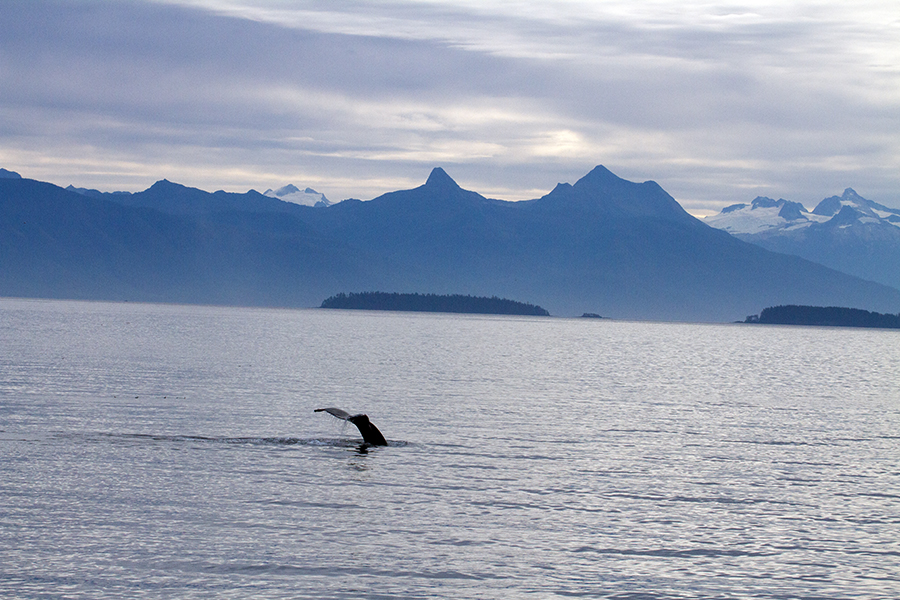
Even on the way up to Orrest Head, I was taken by the view and could not resist a shot or three.

Such a typical English countryside, with the hills, trees and old fashion stone walls. Once at the top, the view gets even better, especially with spectacular clouds all around to increase the perspective in the distant hills.

Any direction I look is picture perfect.  the South of the lake with Windermere and Bowness in the foreground.

Continue Reading »

England 2 – Brighton and the South Coast

pierreo July 14th, 2010

OK – you are right, where is England 1?  That will cover the Lake District and will come later as I do  not have the information I need with me to cover that area.

I finished my tour of Wales, Ireland, Northern Ireland, Scotland and England in Brighton where I spent the last night before taking the ferry back to Brussels.  It is a convenient stopping point between the Lake District and Dover where I thought I could spend an interesting evening and morning.

I stopped at the Hilton, located right on the beachfront.  I will spare you the photo of the room I was given – it was impressive – especially since I only spent less than one hour in it since the local connection to Internet did  not work.  I had to make a choice between Internet and being moved to a smaller room! Internet won…

However, I did catch the view of the beach from the room, first looking East with the still functioning Brighton Pier.  At this time, about 17h, the beach is still very crowded at the end of a gorgeous Sunday.

Next looking West towards the remains of the Western Pier which burned down and was abandonned in 2003

I went jogging along the beach later in the evening, a very pleasant jog.  I can see why this is a popular place to come for the day or just a few days.

As I was there at the end of May, the evening is very long and by 20h, the sun is still up in the sky, but most of the people have left the beach. The Eastern sky is already turning colours from the sun getting closer to the horizon.

Towards the West, about an hour later, the sun is gone and the sunset colours are at their best.

The ruins of the Western Pier are a magnet for birds, most of them, I expect, will spend the night there. Continue Reading »

Ireland 3 – Dublin and North

pierreo June 27th, 2010

On my way to Dublin I decided to make a stop at Clonmacnoise, but before I got there, I stopped at Shannonbridge.  With a name like that, you can just guess what is coming next: a photo of a bridge over the river Shannon, and I shall not disappoint!

There was a motorcycle rally in town – I have never seen so many hairy people wearing so much leather – and I looked obviously out of place so I did not stay too long!

Clonmacnoise is described in ‘the book‘ as the “best monastic ruins in Ireland” so I could not miss that.  I was somewhat concerned by the size of the car park (it is BIG!), but then it was mostly empty so I guess I was at the right time of year.  For medieval ruins, the first statue I saw seemed to be anachronistic (much too modern) - but I still like it enough to take a picture.  It is the pilgrim arriving at his destination…
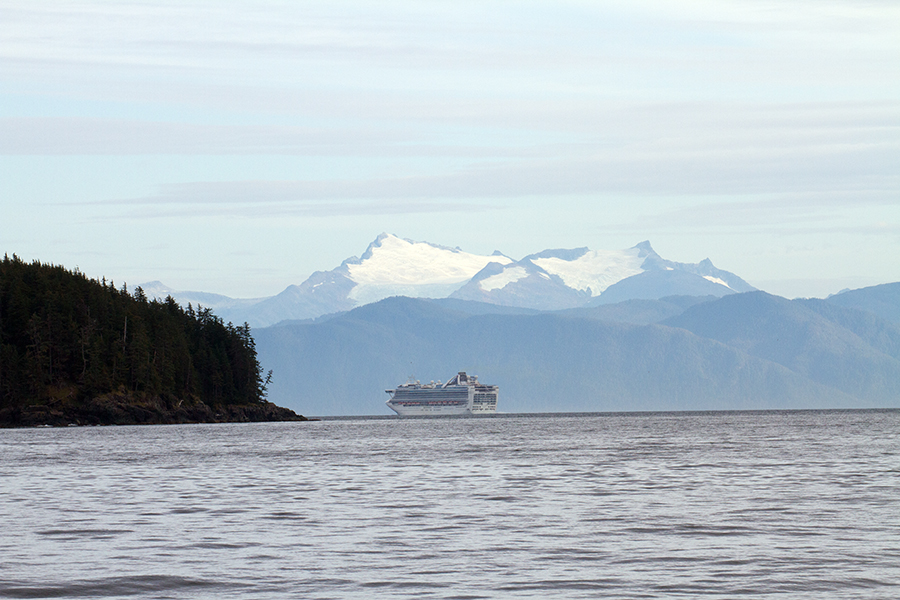
There is a very good video to introduce the site – I had the choice of waiting 1/2 hour for the English version, or have the French version in 5 minutes – so I decided to go along with a bus-load of Frenchies.  Around the ruins, some of the oldest high crosses in Ireland were found in excellent condition.  They have now been moved into the museum to preserve them and replaced in the field with copies.  They all date from before 1000 AD, much before most of the monuments left here.

This is called the South  Cross and is more than 2.5 m tall – it is very impressive; unfortunately there was not enough room for me to get a complete shot, even with my wide-angle lens.

Continue Reading »

Retrospective – New Zealand 2002

pierreo June 20th, 2010

Thursday 28 March, 2002

Flight from Singapore to Auckland leaving at 8:30 PM – after a full day of work, I am finally gone…  I have been thinking about going to New Zealand for over two years and I have been actively planning this trip for over six months.  I am also leaving about two months later than I intended.  I am sure everything will work out in the end…

The plane is completely full, but it looks like I might have a free seat next to me.  But no such luck!  The last person to board the plane sits next to me.  The doors are closed and we take off right on time.

Friday 29 March, 2002

Arrive in Auckland at 10:30 AM after a 10-hour flight, and not much sleep, but I have been able to relax for several hours and I am not too tired.

Taxi to the hotel I had reserved – compared to Singapore, I feel that the 50 NZ$ cost for the taxi is rather high.

The temperature is 22 C and the humidity is below 40% -no air conditioning and finally I breathe again.  I am really looking forward to spending three weeks without the need for A/C.

After a short rest and a shower at the hotel, I walk around the city and visit the site of the last and next America’s Cup, where teams from New Zealand, Italy, Great Britain and the United States are already practicing.  I even see Prada I and Prada II coming back from a morning of sailing (photo to the right).  At the entrance to the “America’s Cup Village” sits the New Zealand challenger in 1989 or 1990: “The Big Boat”.  This was the one America’s Cup that ended up being decided in the courts rather than on the water as both countries (US and N?Z) questioned the legality of the other boat (the US had a catamaran skippered by Dennis Conner).  On the bay, there is a boat with a mast much higher than any other boat.  As it comes closer, I notice the drawing of the America’s Cup on the mainsail.  Sail # NZL-40 is strange though – and the boat has a white hull; the nick name of the New Zealand defenders of the America’s Cup is “Black Magic” and they always have boats with a black hull.  I later find out that this boat was intended as a challenger in the 1995 cup in San Diego for a Bermuda Yacht Club.  However, the hull was not completed until 1996 – a bit late to compete.  A NZ company bought the boat and is now offering day-sails in Auckland on a ‘real’ America’s Cup Boat.  As it gets closer, I notice what looks like 25-30 people in the cockpit!  I am no longer interested in doing this.

In the late afternoon, I visit Sky City, a large complex with the tallest building (a needle tower) in the southern hemisphere.  From here, the view is spectacular, especially given that the sky is menacing over most of the city.  However, pictures did not come out as the windows were heavily tinted and give a shade of green to everything.

Saturday 30 March, 2002

Still in Auckland, I decide to visit Waiheke Island, a small island (looks like less than 3 km long in my guide) in the bay outside Auckland.  I take an early ferry to go across and arrive there at 10 AM planning to explore the island on foot.

The first sign I see when I leave the ferry shows Ostend 33 km!  They cannot mean the one I know about which is more like 33000 km away – maybe this island is larger than I thought.  I than decide to rent a bicycle so that I can move around a little more.  After all, Ostend is a flat place where bicycles will get you everywhere.  This area is slightly different, however, especially after I miss the turn to Belgium Street and end up having to go over a very steep climb to reach the North side of the island.  I have not been able to find out why a small village is called Ostend and there is a Belgium Street on the island.

I also discover that there is a Jazz Festival going on for the Easter weekend.  Great – I get to hear good music while I am sipping good wine and eating a sandwich under an olive tree in one of the local wineries.  I meander on small roads from beach to small park and from quaint pub to cozy neighborhood for several hours.

I unfortunately need to leave early so that I can get my rental car before they close at 5PM.

Sunday 31 March, 2002

I leave Auckland in the early morning for Kerikeri, near the Bay of Islands in the North of the North Island.

On the way I stop in the Waipura Kauri National Forest, the place where you can see the largest tree in New Zealand.  These trees are not particularly pretty (some people might actually go as far as calling them ugly) and are not particularly tall!  But they are MASSIVE!  The largest tree, Tane Mahuta (the 7 largest trees have been given names – this one is shown to the left), is over 5.2 m in diameter and has a straight trunk over 50 m tall.  On top of that, it has 4-5 small branches that look totally inadequate compared to the bulk of the trunk.  These are Kauri trees – not to be confused with the Kaori trees of Western Australia.  The N-Z Kauri is a pine tree while the Kaori is a Eucalyptus; the Kauri is short and squat, the Kaori is tall and slender – but they are both very impressive trees, and live to over 500 years old in order to get this big. In both cases, the trees were almost exterminated by logging in the mid 1900 before they became protected.  Te Matua Ngahere, wider but shorter than Tane Mahuta, is believed to be the widest and oldest tree in New Zealand, at over 4000 years old.  There are lot’s of smaller versions that have trunks of only 2 m diameter, and are only a few 100 years old.  Compared to the two monsters already mentioned, they are of no importance, and are not even indicated in the guide or on the walking trails.

In Kerikeri, I find a very nice Bed and Breakfast for me to spend 2 nights.  It is almost like staying at home as I am actually staying in the “guest room” of a private house owned by very nice people.  When I arrived, I am served “afternoon tea” and given a summary of the activities that I can do while in Kerikeri.  I discovered later that this is customary in most B&Bs in New Zealand.

Continue Reading »

Ireland 2 – Dingle and Galway

pierreo June 19th, 2010

I left the Waterford area and headed towards the Dingle Peninsula in county Kerry.

On the way there, I decided to make a small detour in order to stop at the Rock of Cashel famous for the medieval ruins (castle and church) which adorn the rocky summit of the town.  Even approaching, you get a good idea of the majesty of the place.  The fortifications dominate the whole area.

Inside the wall, there is a cemetery with many statues – this is one of the better ones.  In the distance, you can also see the ruins of Hore Abbey that was attached to Cashel.

There is a beautiful round tower in from of the cathedral.  The round tower is the oldest building on this site, built in the 12th century while the cathedral and castel were built in the 13th and 14th centuries.

There are always interesting view points inside ruins.  Unfortunately, the sun was not always cooperating today but there were some opportunities.

I did not spend a lot of time in Cashel, and did not go to Hore Abbey, as I had a long drive ahead of me to get to Dingle.  As I approached the peninsula, there were landscapes that reminded me of New Zealand.  This is very much like the pictures I took on the way to Mount Cook, on the side of Lake Pukaki.  The mountains here are not quite as high, and the water is salty, but the overall atmosphere is very much the same.

Things only improved as I got closer to Dingle.  I stop on the Inch Sand Spit, a 5 km beach that extends into the Dingle Bay.

Continue Reading »

Ireland 1 – Waterford Area

pierreo June 13th, 2010

After my quick stay in Wales, see the previous post on this subject, I made a dash across the Irish Sea to Ireland – actually a ferry crossing from Fishguard in Wales to Rosslarein Ireland, a 4 hour crossing which gave me plenty of time to relax.  As before, I will include practical details for this portion of the trip at the end of the post.

The first sight of Irish Land, was the lone lighthouse on Tuskar Rock, an isolated islet about 50 km from the coast.  Rosslare Harbour is visible in the ditance, especially its windmill farm, but hard to see on the photo unless you zoom in.

I did not arrive in Rosslare until 18:30 and had about a 1 hour drive to the guest house I had booked.  Fortunately, I could depend on the GPS in my car to steer me in the right direction.  Well, I thought I could until I discovered that there were new roads, not on my GPS and that other roads had changed number.  Right at the entrance to Waterford, there is a new by-pass that avoids the center of town and a bridge across the River Suir which is always a bottleneck with significant traffic jams.  I did not take the by-pass but since this was a Sunday, I had no problems at the bridge and arrived at the Coach House at ButtlerstownCastle just before 8PM.  It is a little out of town, but well worth the extra effort.

Des warned me that it might be difficult to find a place to eat as many restaurants close on Sunday evening.  I stopped at a ‘retro diner’, a throwback to the American Diners of the 50′s and 60′, complete with the individual jukebox on each table (I did not test to see if they worked) and the soda fountain.  Food was not great, but it was open.  After that, I went into Waterford just to orient myself and look around.  To say that the town was quite at 9 PM is an understatement!

I hardly ran into anybody while walking around in the center of the town…

After a good night sleep, I decided to explore the region around Kilkenny, for no other reason than that is the name of my favourite Irish Beer.

By looking at the guide, I decided to first stop at the Priory of Kells.  There seem to be important ruins like this one a little everywhere in Ireland, a constant reminder of both the religious spirit that has symbolised the country, and the violent history that it experienced in the Middle Ages.  This particular priory was fortified with a very strong wall and moat – the wall is still intact in many places.

The priory and the attached abbey were first established in the 12th century but most buildings date from the 14th and 15th centuries.  It was fought over several times, burned down and destroyed and finally abandoned in the 16th century.  There was no one there while I was visiting and I was free to go where I wanted amongst the ruins – very unusual to still be able to do this anywhere in the world…

Just upstream from the priory, a water mill was established in the 19th century – typical early industrial design but for it to be still standing intact, it must have still been in use well into the 20th century.  I could not go inside, but from the outside, I could see the remains of the belt system that must have driven the machinery – not sure what machinery that was.

Continue Reading »

Wales – A trip down Memory Lane

pierreo May 28th, 2010

I lived in Wales for a year a long time ago! Since I left there in 1988, I never went back until recently.

I decided that South Wales would be a convenient stop-over point on my way to Ireland.  I took an early ferry from Dunkirk to Dover with Norfolk Line then drove directly to Saundersfoot where I had booked at the Harbourlight Guest House.  There are more details on these, and other practical aspects of my trip at the end of this post.

I had lived in Saudersfoot for a year in 1987 and 1988.  The town had not changed much since then.  Here is a panoramic view of seafront (assembled from four individual shots) – the photo is shown half size so you are encourraged to open it separately in your browser to see more details.

The old “Coal Office” in front of the harbour has been refurbished, it is now painted white and is again the local information office – when I lived there, it was a chinese Fish&Chips shop where I went on a regular basis for dinner!

Above the harbour, with direct access to a small beach is the mansion where I lived – No, I did not live in the mansion itself, but in the “Coachman’s Cottage” attached to and to the rear of the mansion.  The family who lived there has since moved to Tenby – we have not kept in touch  unfortunately so I did not have a chance to meet with them again.

Here is a photo that was taken while I was there – different angle, but the same cliffs and the same house on top!

The scenic town of Tenby, just down the coast from Saudersfoot, has not changed at all.  The ramps on the left of this photo are for launching the RNLI Lifeboats which cover the Pembrokeshire Coast from here.  At low tide, access to the harbour itself is somewhat restricted.

The seafront is essentially the same as it must have been 100 or more years ago.

Continue Reading »

Laos 5 – The 4000 Lakes

pierreo May 22nd, 2010

At the South of Laos, where the Mekhong flows into Cambodia, there are said to be more than 4000 islands, so many that the flow of the river is almost completely blocked. There are narrow passages between the larger islands with strong rapids or even waterfalls, supposed to be spectacular. The channels between the islands are not navigable at all and therefore this creates a total blockage to shipping from the lower to the upper Mekhong.

We are staying on Don Khong, the larger of the islands, which means one more ferry – no not this one which is intended for motorcycles only.

After we settled into the hotel, I went for a walk around the small town of Muang Khong. Facing the ‘central park’ is a beautiful temple with a huge sitting Buddha – the first time I saw one in a temple sitting out in the open. The temple is called Wat Phuang Kaew. The water buffaloes are on their way to take a bath in the river.

I heard a school bell, and soon after that, the street filled with bicycles. I understood that here it actually pays to have a second person in the back of your bike if you are a girl, as that person can hold the umbrella for you, to make sure your skin stays as white as possible.

Not everybody rides their bicycle to school. There are obviously students who live across the river and have to row their canoes back home. The river filled with white dots as they all wear white shirts as school uniforms.

I was up before dawn the next day, around 5AM, and it was still totally dark outside. I was looking for the morning’s farmer’s market that is held here every day from dawn to 8 or 9 AM. It gave me a chance to see the sunrise; actually the colours and the sky were better even before the sun rose.

There is a lone fisherman playing the early bird. He probably already got the early worm, now he is trying to get the best fish. Continue Reading »

Laos 4 – The South of Laos

pierreo May 16th, 2010

After Vientiane we were supposed to fly to Pakse, but since the airport of that town is closed in order to resurface the runway, we flew instead to Savannakhet, about 150 km further North. Not a real problem, but it meant 3 more hours of driving to get to our final destination, the Tat Fan National Protected Area (or NPA) and an Eco Lodge right on the edge of an escarpment, the Tad Fane Lodge. The claim to fame of the lodge is the best view of the Tat Fan Waterfall, one of the best in this area.


It is actually two waterfalls right next to each other, one smaller than the other. Remember, this is the dry season – I wonder what these are like at the end of the rainy season?


I went for a short walk to see if I could get a different viewpoint of the falls. I did not – it seems that the resort is at the only place where there is a reasonably clear view from the opposite side of the escarpment. However, I did discover that spring has other advantages, with beautiful violet flowers everywhere along the path.

As the sun started to go down, the reddish light metamorphosed the falls, gradually.


The effect get better and better with time


One the second day, we went for what was supposed to be an easy walk to view more water falls. It started easy enough as we went to another resort (I cannot remember the name) near another waterfall, for which I also forgot the name – I do have a photo, though!

Continue Reading »

Laos 3 – Vientiane

pierreo May 11th, 2010

After the North, we flew to Vientiane, the new capital of Laos. We arrived relatively late and so there was no time to do anything, except have a few beers while watching the sunset over the Mekhong river. And not much of a sunset, again because of the smoke and ash in the air. After I took this picture, the sun disappeared behind a black veil, as if behind a mountain, but I know there are no mountains there…

We visited what is thought to be the oldest remaining temple in Vientiane the next morning. The layout Wat Si Saket is not quite the same as what we generally saw further North, which was more similar to Thai temples. Here there is a central hall surrounded by a square ‘cloister-type’ building. In this temple, both the main hall, on the right of the picture, and the “cloisters” on the left of the picture are full of Buddha statues.

The Buddhas here all look identical, but they are not. The face, the hair, the hands and sometimes the clothing are slightly different for each statue. See if you can spot the differences.

There are also Buddha statues in each of the small niches on the wall … thousands of them.  The main hall is beautifully decorated

The shutters on the windows are designed to inspire

Across the street was the presidential palace, not where he sleeps, but where he works. It is mostly bureaucrats who work there, we were told. Next to the palace, is another, newer temple called Haw Pha Keao, and in the more traditional layout, with several buildings in a large open area. It was commissioned by the king specifically to house the Emerald Buddha now housed in the temple of the Royal Palace in Bangkok!

Continue Reading »

Next »